
Function & Confidence
Eat and speak comfortably with secure tooth replacement.
Digitally planned implants for natural function and aesthetics.
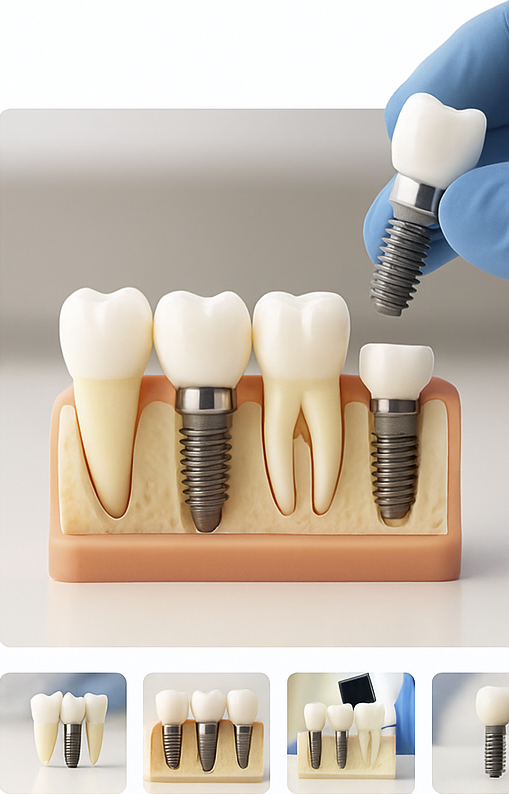
Dental implants are small titanium posts that replace the roots of missing teeth. Once healed, a custom crown, bridge, or full-arch prosthesis is attached to restore natural function and appearance. Implants help preserve bone, protect neighboring teeth, and can dramatically improve your ability to chew and speak.
Dental implants replace missing roots and support crowns, bridges, or full‑arch solutions. Planned with CBCT 3D imaging and iTero scans, they restore chewing function and preserve bone.
Options range from single‑tooth implants to multiple teeth or full‑arch rehabilitation. When needed, we coordinate grafting to improve foundation and long‑term success.
Eat and speak comfortably with secure tooth replacement.
Stimulation helps maintain jawbone where teeth are missing.
Custom ceramic restorations blend with your smile.
Consultation with 3D imaging and digital planning; discuss options and timing.
Grafting when indicated; precise implant placement and healing (integration).
Placement of custom abutment and crown/bridge; maintenance plan to protect results.
Am I a candidate for a dental implant?
Most healthy adults with adequate bone volume are candidates. If bone is thin or soft, grafting can often prepare the site. We’ll confirm with a 3D CBCT scan.
How long does the implant process take?
Typical timelines range from 3–6 months depending on healing and whether grafting is needed. Same‑day (“immediate”) options may be possible in select cases.
Will I be without a tooth during healing?
No—temporary solutions such as a provisional crown, Essix retainer, or flipper can maintain your smile while the implant integrates.
Does the procedure hurt?
Most patients report pressure rather than pain during placement. Discomfort is usually mild and manageable with over‑the‑counter medication.
What are the risks?
Risks include infection, inadequate osseointegration, sinus or nerve proximity issues, or prosthetic screw loosening. Careful planning and good home care minimize these.
How do I care for an implant?
Brush twice daily, clean around the implant with floss or interdental brushes, and maintain professional cleanings. Avoid smoking, which increases failure risk.
What do implants cost?
Fees vary with site preparation and the type of restoration (single tooth vs. full‑arch). We’ll provide a written treatment plan and review insurance and financing options.
What if I grind my teeth?
We may recommend a night guard and design the restoration for strength and proper bite to protect your implant.
What is All‑on‑X?
A full‑arch fixed bridge supported by 4–6 implants. It restores a full smile and chewing function, often with immediate provisional teeth on the day of surgery.
How long do implants last?
With good hygiene and regular care, implants can last decades. The attached crown may need replacement over time due to normal wear.
Am I a candidate if I’ve had bone loss?
Often yes. Grafting or different implant designs can expand options—CBCT helps us decide.
What is recovery like?
Most patients manage with over‑the‑counter medication and return to routine within a day or two.
How long do implants last?
With good hygiene and maintenance, implants can last many years—often decades.
Does insurance help?
Coverage varies by plan; we’ll provide an estimate and help with claims.
Professional Affiliations