Comfort & Portability
Smaller and easier to travel with than many CPAP setups.
Custom oral appliances to treat snoring and obstructive sleep apnea (OSA).
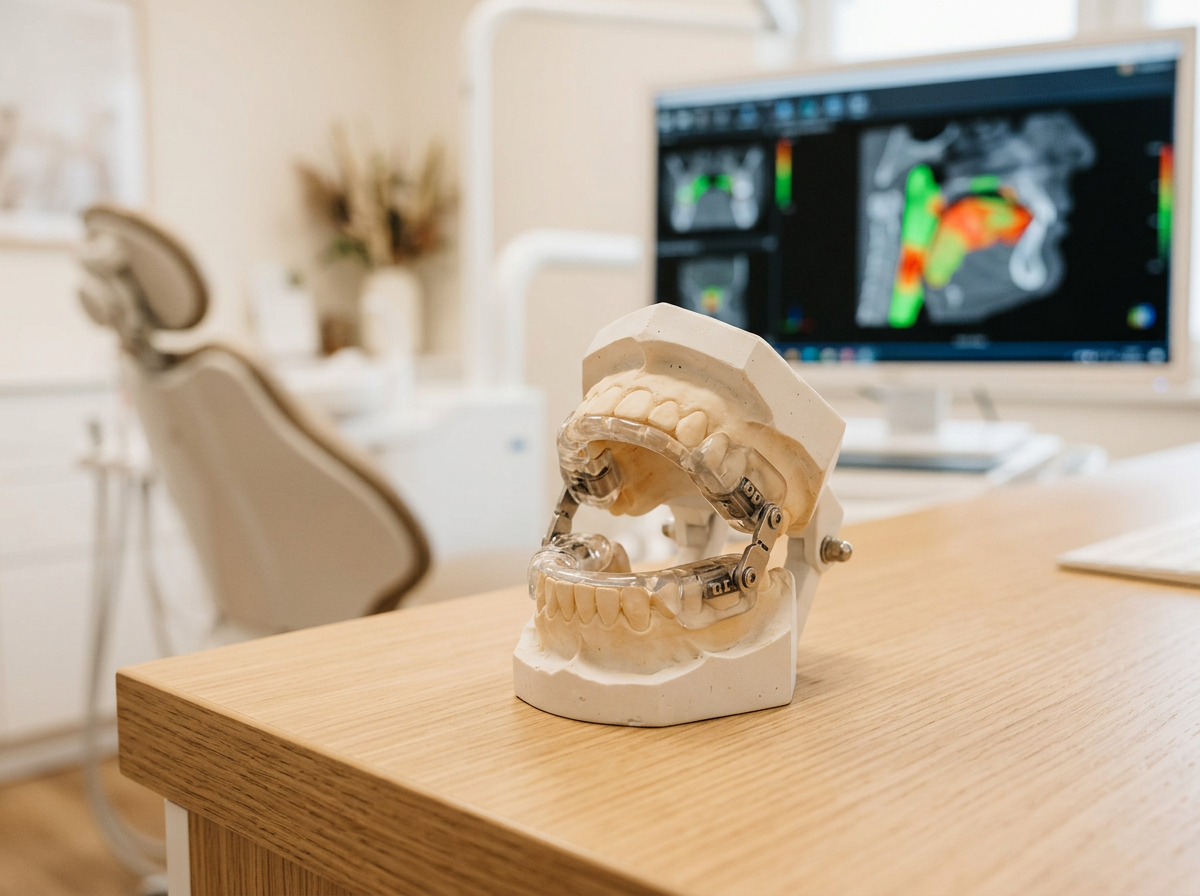
Oral appliance therapy treats snoring and many cases of obstructive sleep apnea (OSA) by gently advancing the lower jaw to help keep the airway open. Dr. Asma Sajid is an AADSM (American Academy of Dental Sleep Medicine) member and expert in dental sleep medicine.
We coordinate with your sleep physician for diagnosis, titration, and follow‑up sleep studies to confirm results—especially if you’re reducing or replacing CPAP.
Dental sleep medicine focuses on treating snoring and obstructive sleep apnea (OSA) with custom oral appliance therapy . These snoreguards and oral appliances gently advance the lower jaw to help keep the airway open during sleep and can be an effective alternative or complement to CPAP for certain patients.
What we provide :
Oral appliances are typically considered for mild‑to‑moderate OSA, or when CPAP is not tolerated. We collaborate closely with your medical team to ensure safe, coordinated care.
Smaller and easier to travel with than many CPAP setups.
Many patients find appliances easier to wear consistently.
Designed and monitored in concert with your physician.
Consultation and review of sleep study results (or referral for testing).
Digital records and appliance selection; precise fitting and instructions.
Titration over several weeks; follow‑up study to verify effectiveness.
Do I need a diagnosis first?
Yes—OSA is a medical condition. We collaborate with your physician for testing and oversight.
Will this replace CPAP?
For many mild to moderate cases, yes or in combination; your physician will determine suitability.
Are there side effects?
Temporary jaw or tooth soreness can occur; we manage fit and exercises to minimize issues.
Is it covered by insurance?
Often billed to medical insurance; coverage varies by policy and documentation.
Am I a candidate for an oral appliance?
Many patients with primary snoring or mild‑to‑moderate OSA are candidates. Suitability depends on your diagnosis, airway anatomy, and dental health.
Is an appliance as effective as CPAP?
For mild‑to‑moderate OSA, oral appliances can be effective and are often better tolerated. For severe OSA, CPAP remains first‑line; an appliance may still help if CPAP isn’t tolerated.
What side effects can occur?
Temporary jaw soreness or tooth movement can occur; careful titration and regular follow‑up help minimize these effects.
Do I need a sleep study?
Yes. Diagnosis requires a sleep study interpreted by a physician. We’ll coordinate testing and share results to guide therapy.
Professional Affiliations