Minimally Invasive Comfort
The laser's precision means less tissue disruption, which translates to less discomfort during and after the procedure. Many patients require only topical anesthesia — and some need none at all.
Gentle soft-tissue procedures with faster recovery for many cases.
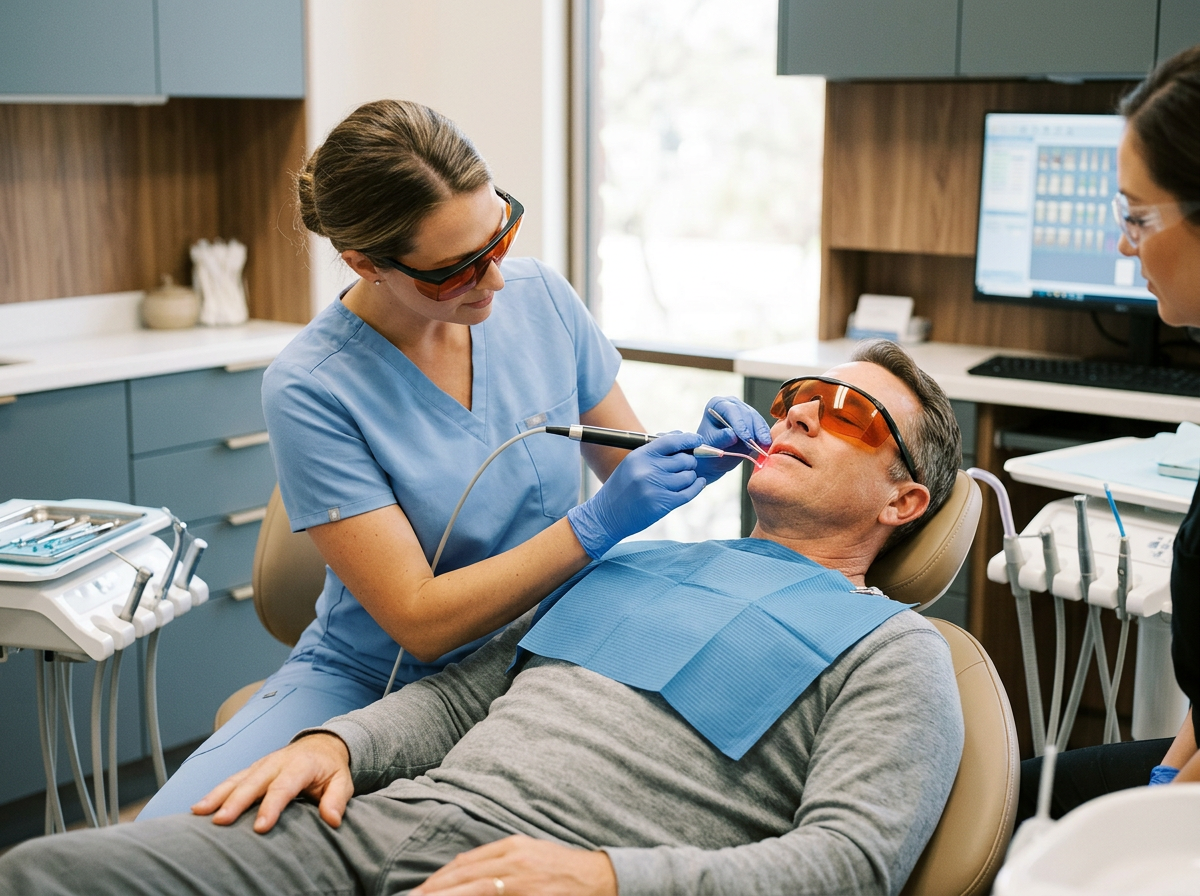
Laser dentistry uses focused light energy to perform a range of soft-tissue procedures with remarkable precision and comfort. Our diode laser allows us to reshape gum tissue, remove lesions, treat tongue- and lip-ties, reduce bacteria in periodontal pockets, and manage several other conditions — often with less bleeding, less swelling, and faster healing than traditional surgical methods.
Because the laser energy seals blood vessels and nerve endings as it works, many procedures can be performed with little or no local anesthesia, and sutures are often unnecessary. Patients frequently report that laser procedures feel gentler and recover faster than they expected.
How dental lasers work: Our diode laser emits a concentrated beam of light at a specific wavelength that is absorbed by soft tissue and bacteria. The energy precisely removes or reshapes tissue layer by layer while simultaneously cauterizing (sealing) the treatment area. This dual action reduces bleeding, minimizes infection risk, and promotes faster healing. The laser tip is about the size of a pen, and we control intensity and exposure to match each procedure.
Common procedures using laser dentistry: gum recontouring and crown lengthening (cosmetic gum reshaping), frenectomies (releasing tongue-ties and lip-ties), gingivectomy (removing excess gum tissue), bacterial reduction during periodontal (deep) cleanings, treatment of canker sores and cold sores (pain relief and faster healing), removal of small benign soft-tissue lesions (fibromas), exposure of unerupted teeth for orthodontic treatment, and de-pigmentation of dark gum tissue.
The laser's precision means less tissue disruption, which translates to less discomfort during and after the procedure. Many patients require only topical anesthesia — and some need none at all.
Laser energy cauterizes as it works, sealing small blood vessels immediately. This means a cleaner surgical field, less post-operative swelling, and a more comfortable recovery.
Because the laser creates a biologically sealed wound surface, healing is often significantly faster than with traditional scalpel surgery. Many patients return to normal activities the same day with minimal aftercare.
We evaluate the treatment area, take any necessary photos or measurements, and discuss your comfort options — from topical numbing gel to local anesthesia if desired.
Protective eyewear is placed. The laser tip is guided precisely along the treatment area, reshaping tissue or reducing bacteria with controlled energy pulses.
We check the area, irrigate if needed, and confirm the desired outcome. Most procedures take just a few minutes.
Post-procedure instructions are simple: gentle brushing near the site, soft foods for a day or two, and salt-water rinses. Follow-up is scheduled if needed, though many laser sites heal without complication.
Does laser treatment hurt?
Most patients report minimal discomfort. The laser seals nerve endings as it works, which reduces pain. We offer topical numbing gel and local anesthesia as needed, but many patients find they don't need traditional injections.
Is there a burning smell during the procedure?
You may notice a brief, mild odor as tissue is gently reshaped. This is normal, harmless, and typically lasts only a few seconds. We use suction to minimize it.
How long does recovery take?
Most patients feel comfortable within a day or two. The treated area may appear white or slightly swollen initially, but healing is typically faster and less painful than with traditional surgery.
Is laser dentistry safe?
Yes. Dental lasers have been used safely for decades and are cleared by the FDA for a wide range of soft-tissue procedures. We follow strict protocols for wavelength settings, power levels, and protective eyewear.
Can lasers treat gum disease?
Lasers are an effective adjunct to periodontal treatment. During deep cleanings, we use the laser to reduce bacteria in infected pockets and promote tissue reattachment. This can improve outcomes for patients with moderate to advanced gum disease.
Will I need stitches?
In most cases, no. The laser seals the wound as it works, eliminating the need for sutures in the majority of soft-tissue procedures. This also means one less follow-up visit.
Is laser treatment safe with medical devices like pacemakers?
Generally yes, but please inform us about any medical devices, conditions, or medications before treatment. We'll review your health history and confirm safety before proceeding.
Can the laser whiten my teeth?
Our diode laser is designed for soft-tissue procedures, not tooth whitening. However, some laser-assisted whitening systems do exist. We offer separate in-office and take-home whitening options — ask us about the best fit for your goals.