
Virtually Invisible
Clear aligners are made from transparent SmartTrack material that’s nearly undetectable when worn. Most people won’t notice you’re straightening your teeth — perfect for adults and teens who prefer a discreet option.
Clear aligners designed from precise 3D scans.
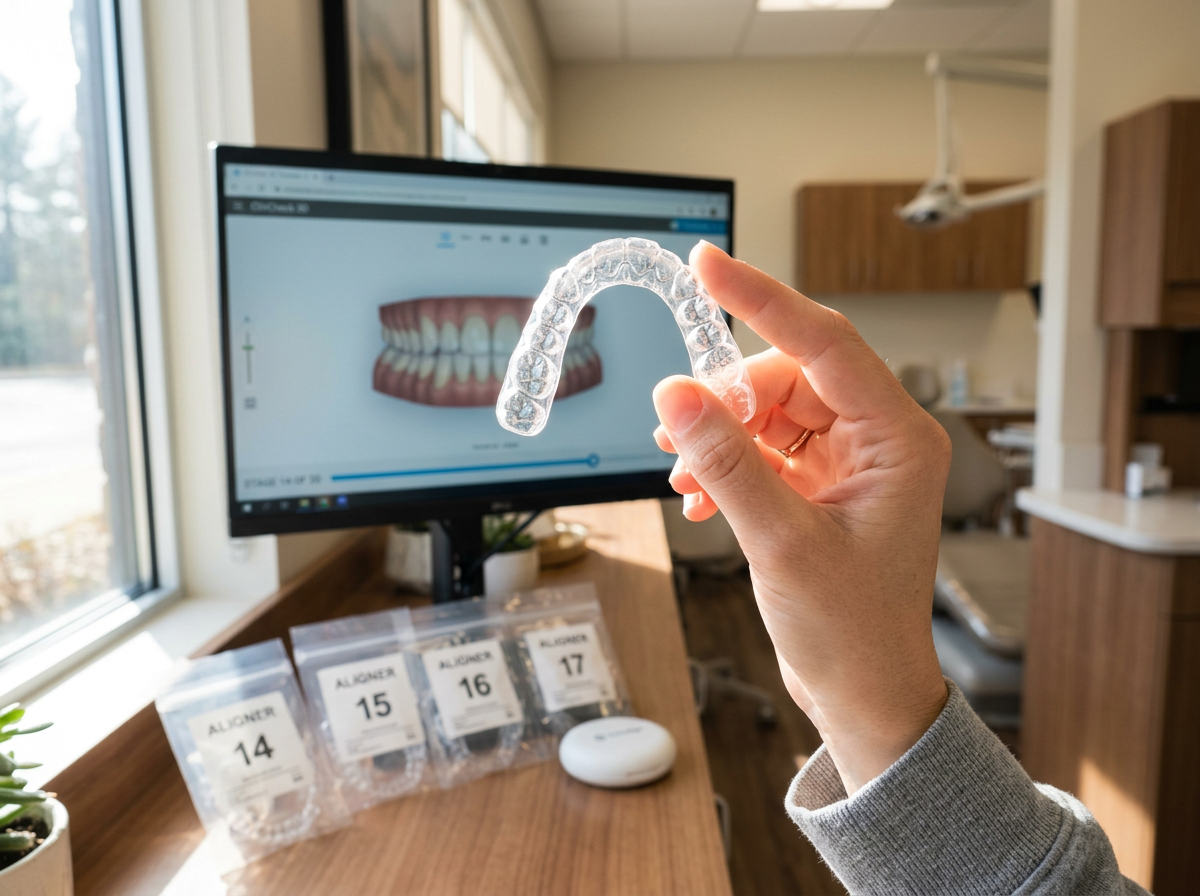
Invisalign uses a series of custom-made, virtually invisible aligners to straighten your teeth without metal brackets or wires. Each set of aligners is precision-engineered from SmartTrack material using your 3D digital scan, applying gentle, controlled forces to move specific teeth at each stage of treatment. You’ll switch to a new set of aligners every one to two weeks, gradually shifting your teeth into their ideal positions.
Treatment planning begins with a detailed iTero 3D scan of your teeth, which feeds directly into Invisalign’s ClinCheck software. This lets us design your entire treatment digitally — mapping the exact movement of each tooth from start to finish — so you can preview your projected results before committing. Attachments (small, tooth-colored shapes bonded to certain teeth) and precision-cut features in the aligners help achieve complex movements that earlier generations of clear aligners couldn’t handle.
How Invisalign technology works: The ClinCheck system uses advanced algorithms to calculate the most efficient tooth movement sequence for your case. Each aligner is trimmed to follow your gum line for comfort and is made from SmartTrack, a patented thermoplastic that delivers consistent, gentle forces over the wear period. SmartTrack material also makes aligners easier to insert and remove compared to earlier clear aligner materials. For optimal results, aligners should be worn 20–22 hours per day, removed only for eating, drinking (anything other than water), brushing, and flossing.
What Invisalign can treat: crowding and spacing, overbite and underbite, crossbite and open bite, midline misalignment, and mild to moderate malocclusion in teens and adults. Invisalign First is also available for younger patients with a mix of baby and permanent teeth. More complex cases that once required traditional braces can now often be treated with Invisalign, though some severe skeletal or bite issues may still benefit from other orthodontic approaches.
Clear aligners are made from transparent SmartTrack material that’s nearly undetectable when worn. Most people won’t notice you’re straightening your teeth — perfect for adults and teens who prefer a discreet option.
Unlike braces, aligners come out for eating, brushing, and special occasions. This means no food restrictions, easier oral hygiene, and the flexibility to remove them briefly when it matters most.
ClinCheck 3D software maps your entire treatment from day one, showing projected tooth movements and final results before you start. This data-driven approach improves predictability and helps set realistic expectations.
Comprehensive consultation including iTero 3D scan, dental photographs, and bite assessment. We evaluate your teeth, gums, and bone health to confirm you’re a candidate.
Digital treatment planning using ClinCheck software. We design each stage of tooth movement and review the projected outcome together — including a 3D simulation of your finished smile.
Your custom aligners are fabricated and shipped to our office. At your delivery appointment, we bond any needed attachments, fit your first set of aligners, and provide detailed wear instructions.
You’ll switch to new aligners every 1–2 weeks as directed, wearing them 20–22 hours per day. Periodic check-in visits (typically every 6–8 weeks) let us monitor progress and make refinements.
Once active treatment is complete, we remove attachments and transition you to retainers to maintain your new smile. We’ll design a long-term retention plan to protect your investment.
How long does Invisalign treatment take?
Treatment length varies by complexity. Mild cases may finish in as few as 3–6 months; moderate cases typically take 12–18 months. We’ll give you a projected timeline during your ClinCheck review, though biology and compliance can influence the final duration.
Does Invisalign hurt?
You’ll likely feel pressure and mild tightness for the first day or two of each new aligner set — this is normal and means the aligners are working. Most patients describe it as mild discomfort rather than pain, and it typically subsides quickly.
Will I need attachments?
Most cases use attachments — small, tooth-colored composite bumps bonded to specific teeth. They help the aligners grip and guide complex movements. Attachments are barely noticeable and are removed easily at the end of treatment.
Can I eat normally?
Yes — you remove aligners to eat and drink anything other than water, so there are no food restrictions. Just brush your teeth before reinserting aligners to prevent trapping food and bacteria.
Can I drink coffee or wine with aligners in?
Water is the only safe beverage while wearing aligners. Hot drinks can warp the plastic, and colored beverages can stain the aligners. Remove trays, enjoy your drink, brush or rinse, then reinsert.
How often do I need office visits?
Typically every 6–8 weeks for progress checks and to pick up your next sets of aligners. Visits are usually quick — about 15–20 minutes.
Will I need retainers after treatment?
Yes — retainers are essential to prevent teeth from shifting back. We’ll provide clear retainers (similar to your aligners) and recommend a wear schedule that transitions from full-time to nighttime over several months.
Is Invisalign covered by insurance?
Many dental insurance plans with orthodontic benefits cover Invisalign the same way they cover traditional braces. We verify your benefits upfront and offer flexible payment options to make treatment accessible.
Can teenagers use Invisalign?
Absolutely. Invisalign Teen includes compliance indicators (blue dots that fade with wear) and extra replacement aligners in case any are lost. It’s an excellent option for responsible teens who want a discreet alternative to braces.
What if my teeth don’t track with the aligners?
If a tooth isn’t moving as planned, we can make adjustments — refinement scans, new aligners, or minor changes to attachments. This is a normal part of the process, and our digital monitoring helps us catch and correct tracking issues early.